Wolfson Women in Science: Dr Stéphanie Abo
This week, we celebrate Wolfson’s Women in Science. To mark British Science Week and International Women’s Day, we are sharing the stories of 5 female members of Wolfson’s scientific community who are making incredible contributions to their academic fields.
Dr Stéphanie Abo is a mathematician whose work sits at the interface of mathematics, biology, and medicine. Her interests span cell biology, circadian clocks, and sex differences in physiology. She is a Royal Society Career Development Fellow at the Mathematical Institute and a Junior Research Fellow at Wolfson College.
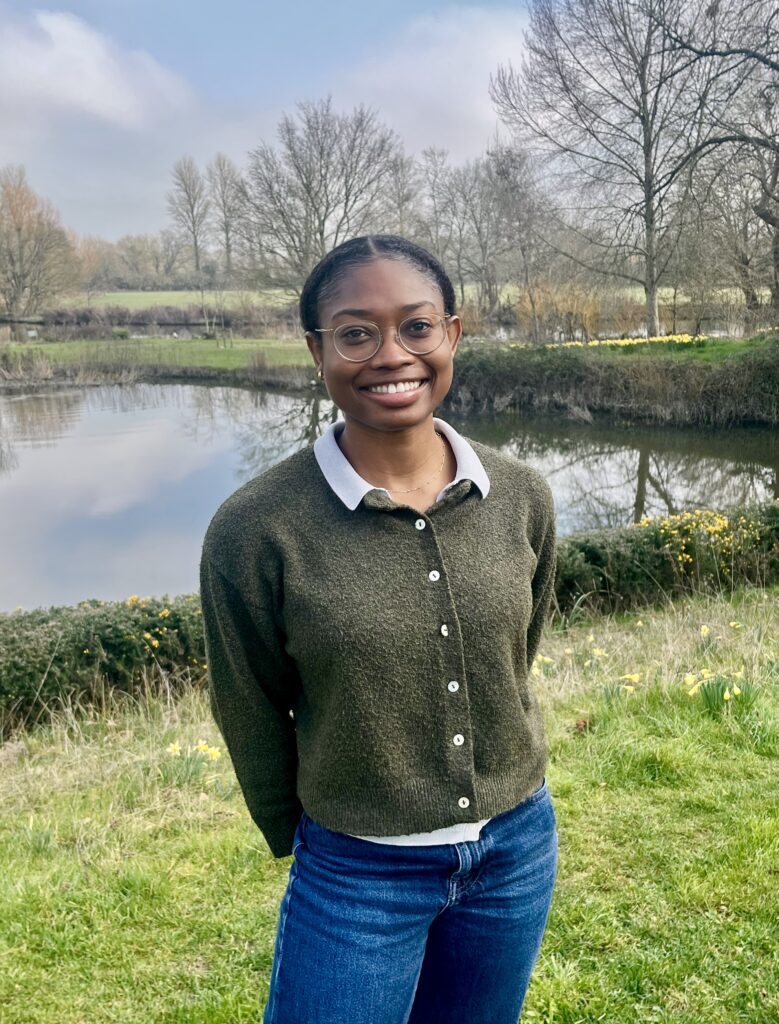
Stéphanie, tell us more about your research.
I am a mathematician working at the interface of mathematics, biology, and medicine. I use mathematical models to understand how complex biological systems behave and how we can extract reliable insight from data.
Over the years, I have worked on problems in cell biology, on circadian clocks (the internal timing systems that regulate daily physiological rhythms such as sleep and hunger) and on sex differences in physiology where biological differences can significantly affect how we interpret experiments or design treatments. Across these areas, the common thread is using mathematics to connect underlying mechanisms with measurable outcomes.
My current focus is on data-driven modelling of collective cell behaviour. The question is deceptively simple: if you could watch a population of cells spread across a tissue, how fast do they move? More specifically, to what extent does the internal timing of cell division, the time it takes a cell to complete one cycle and divide, matter for that speed? Collective cell migration is central to embryonic development, wound healing, and normal tissue maintenance. When these processes are disrupted, the same mechanisms contribute to diseases such as fibrosis and tumour invasion. I work to understand how individual cell behaviour shapes these larger outcomes.
What inspired you to pursue a career in your specific field?
Looking back, my career choices were shaped by many small moments rather than one grand plan. But two stand out. My Grade 10 mathematics teacher ignited my love for the subject. I went from simply being good at maths to wanting to take it seriously. Later, as an undergraduate student in Maths, I attended a talk by an applied mathematician on using mathematical models to study infectious diseases such as malaria and HIV. That talk shifted something for me. It showed me that mathematics could be used to understand urgent, real-world problems. She later became my research supervisor, and that was my pivot into mathematical biology!
Today, I continue to be motivated by the possibility of contributing to problems that matter. I value working with experimentalists and clinicians and seeing mathematics function as part of a larger scientific effort. I am also motivated by the hope of encouraging more girls and women to pursue mathematics and STEM. I have a particular interest in women’s health, an area where more and better data and better modelling are still urgently needed.
What advice would you give to young women who are interested in pursuing a career in mathematics?
Reach out. Ask questions. Continuously seek out people whose work you are curious about and ask them how they got there. Most people are more generous with their time than you think. Give yourself permission to explore your interests and your abilities.
It is not always easy, and there will be moments of doubt. That does not mean you do not belong. I want to stress this: you belong. You have always belonged. “It’s challenging” often just means you are expanding your scope of knowledge. At the same time, know yourself well enough to recognise when something is no longer the right fit.
Do not blindly accept the choice between “academia” and “not academia.” Rigorous mathematics and scientific thinking exist in many spaces: universities, industry, policy, healthcare, and beyond. Find the environment that works for you. It may even be a combination, and you are allowed to change direction along the way.
Tell us more about your life at Wolfson College.
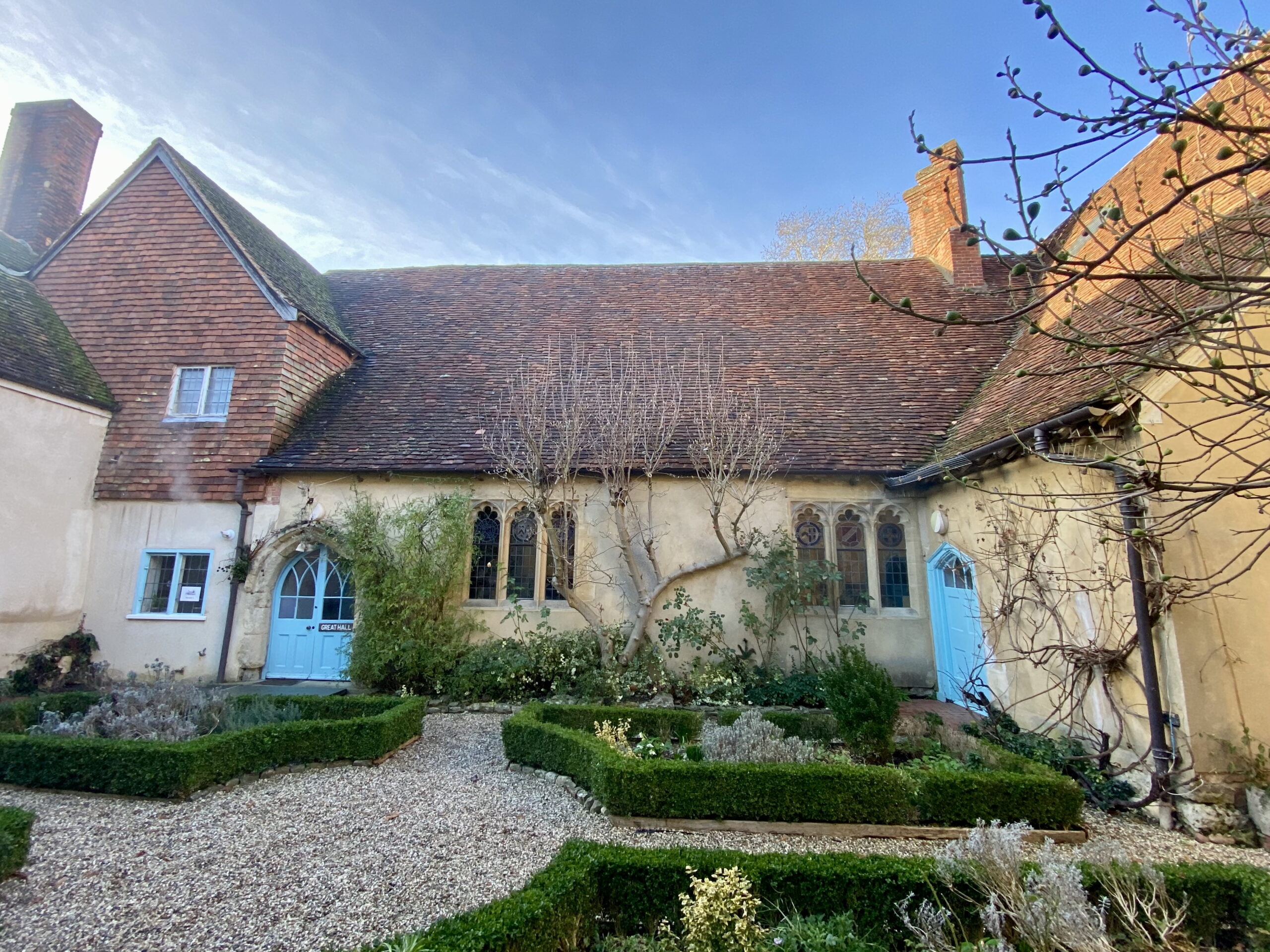
Wolfson has a strong sense of community, and that is what I value most. It is a place where you can have thoughtful academic conversations and then just as easily sit down for dinner, play tennis, or go punting together. The fellowship is diverse culturally, intellectually, and in the range of activities and interests people bring with them. The College also hosts a wide range of accessible talks and discussion groups across the humanities and STEM, which makes it easy to engage seriously with ideas beyond your own field.
I am part of the Academic Committee and the Academic Proposals and Funding Sub-Committee, which gives me the opportunity to contribute to the College’s academic life in a practical way. I also join an interdisciplinary discussion group on values and aesthetics led by Prof. Elena Draghici-Vasilescu. We often ask what we mean by “values” and whether they are absolute or shaped by context. I enjoy the chance to think beyond my own discipline.
Outside formal settings, I am part of the social tennis group. It is a reminder that college life is not only about research and committees, but also about balance and connection.