Wolfson Women in Science: Dr Rebecca Crossley
This week, we celebrate Wolfson’s Women in Science. To mark British Science Week and International Women’s Day, we are sharing the stories of 5 female members of Wolfson’s scientific community who are making incredible contributions to their academic fields.
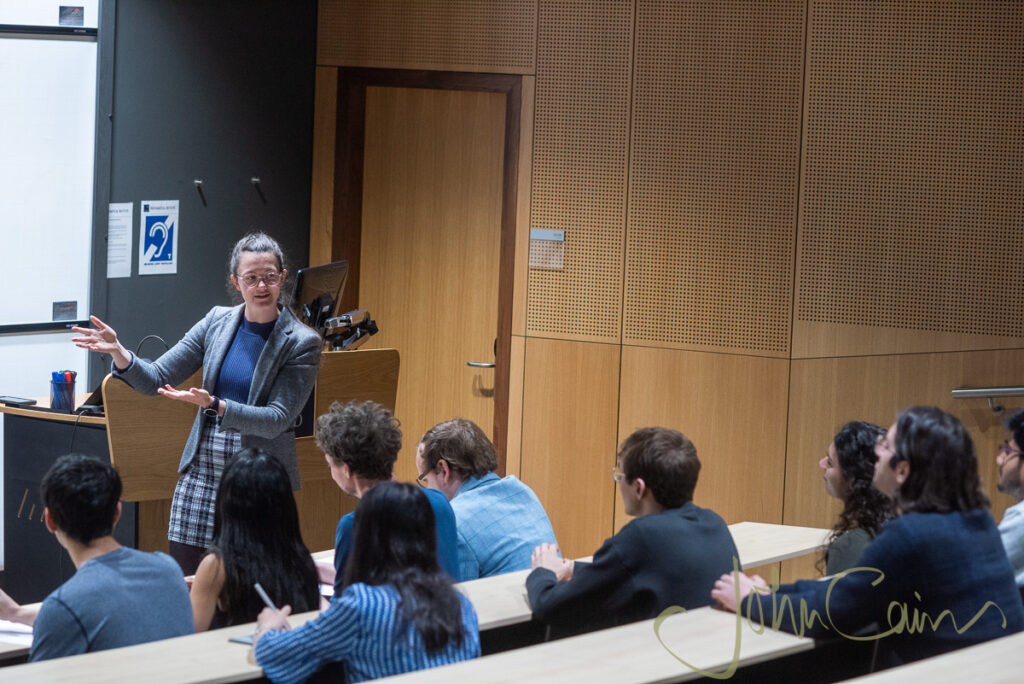
Dr Rebecca Crossley is an EPSRC Postdoctoral Pathway Research Fellow in Mathematical Biology at the University of Oxford. She works in the Wolfson Centre for Mathematical Biology in the Mathematical Institute, where her research focuses on developing machine learning and data-driven methods for learning the mechanisms underpinning collective cell migration—an essential process across biology: spanning from tissue engineering to immunology and cancer growth. She is also a member of Wolfson College, where she actively engages with the interdisciplinary research and sporting community.
Rebecca, tell us more about your research.
My research focuses on developing a better understanding of how cells move and grow together, with a particular interest in the role of heterogeneity between the cells and in their surrounding micro-environment. I try to help solve this problem by working with mathematicians and biologists alike to tackle one of the central challenges in modern mathematical biology: how can we rigorously learn the laws governing collective behaviour from complex, noisy, and heterogeneous biological data?
My work combines partial differential equation (PDE) analysis, numerical simulations, and data-driven modelling to uncover these governing mechanisms. Recently, I have developed Biologically-Informed Neural Networks (BINNs), which integrate the interpretability of mechanistic PDE models with the flexibility of machine learning. I use these to try and extract as much insight as possible from existing datasets. BINNs allow us not only to fit to existing data, but to discover interpretable equations and quantify when such discoveries are mathematically and statistically trustworthy. Ultimately, I aim to establish rigorous foundations for interpretable AI in scientific discovery across disciplines.
What inspired you to pursue a career in applied mathematics?
I was drawn to applied mathematics at quite a young age, when I realised that mathematics underpins everything happening in the world around us. As Galileo said, “the universe is a book written in the language of mathematics”, and I truly believe that mathematics allows us to reveal hidden patterns and structures throughout extremely complex systems.
Biology, in particular, presents extraordinary patterns that emerge from seemingly simple interactions but are far from simple to understand mathematically. The challenge of uncovering those hidden rules fascinates me. My very first inspiration came from my aunt teaching me about Mendelian genetics and Punnett squares when I was only 9 years old. I was completely hooked and always knew I wanted to end up working at this intersection.
What advice would you give to young women who are interested in pursuing a career in science?
One of the most important things I have learned working as a scientist and mathematician is that research and discovery are not all about speed, but about depth, persistence, and continued curiosity. It can sometimes feel intimidating, particularly in environments where women are underrepresented, but we bring a different perspective and way of thinking that benefits the research environment, culture, and collaborations enormously.
I would encourage women considering academia to seek out collaborators and mentors who value your ideas and respect you as an individual. Remember that research is rarely linear: it involves a lot of uncertainty and continual revision. Feeling isolated and inadequate, although not enjoyable, does not mean you do not belong—it means you are doing real research! Your questions, your voice, and your way of approaching problems can be valuable contributions if you want them to be.
What is one of your proudest moments as a researcher?
One of my proudest moments as a researcher was participating in a UK government hackathon focused on achieving low-energy and net-zero carbon emissions. Our challenge was to determine optimal locations across the UK for renewable power plants in order to maximise efficiency and minimise emissions under real-world constraints.
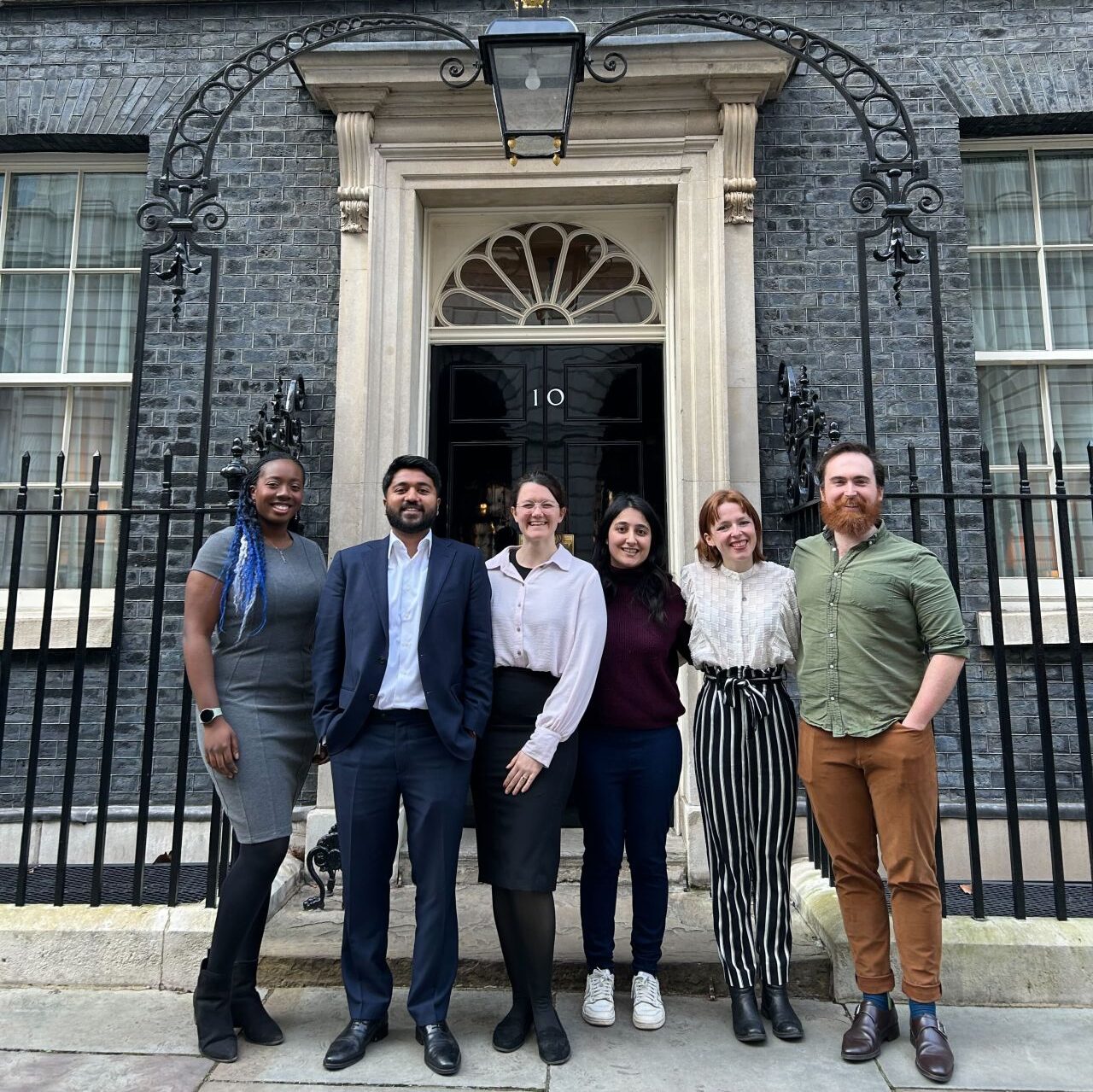
Within one day, I taught myself the necessary optimal control theory and optimisation coding techniques from scratch and implemented a working framework capable of identifying strategically optimal sites. We used this to develop a mathematically grounded and computationally robust approach under intense time pressure. Our project was selected as a finalist, and we were invited to 10 Downing Street to present our work and meet the Prime Minister.
Beyond the recognition itself, what made this moment especially meaningful was demonstrating the potential of mathematical thinking, when applied quickly and collaboratively, to contribute to urgent national and global challenges such as the net-zero transition.
Tell us about your life at Wolfson.
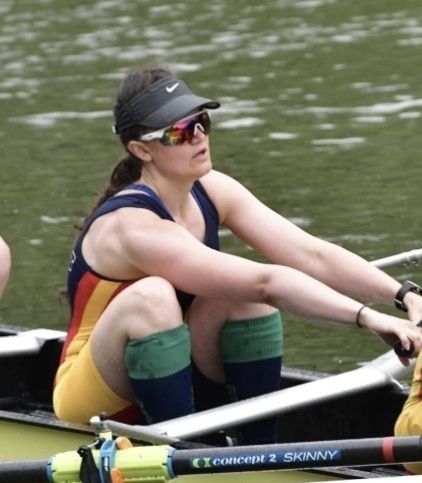
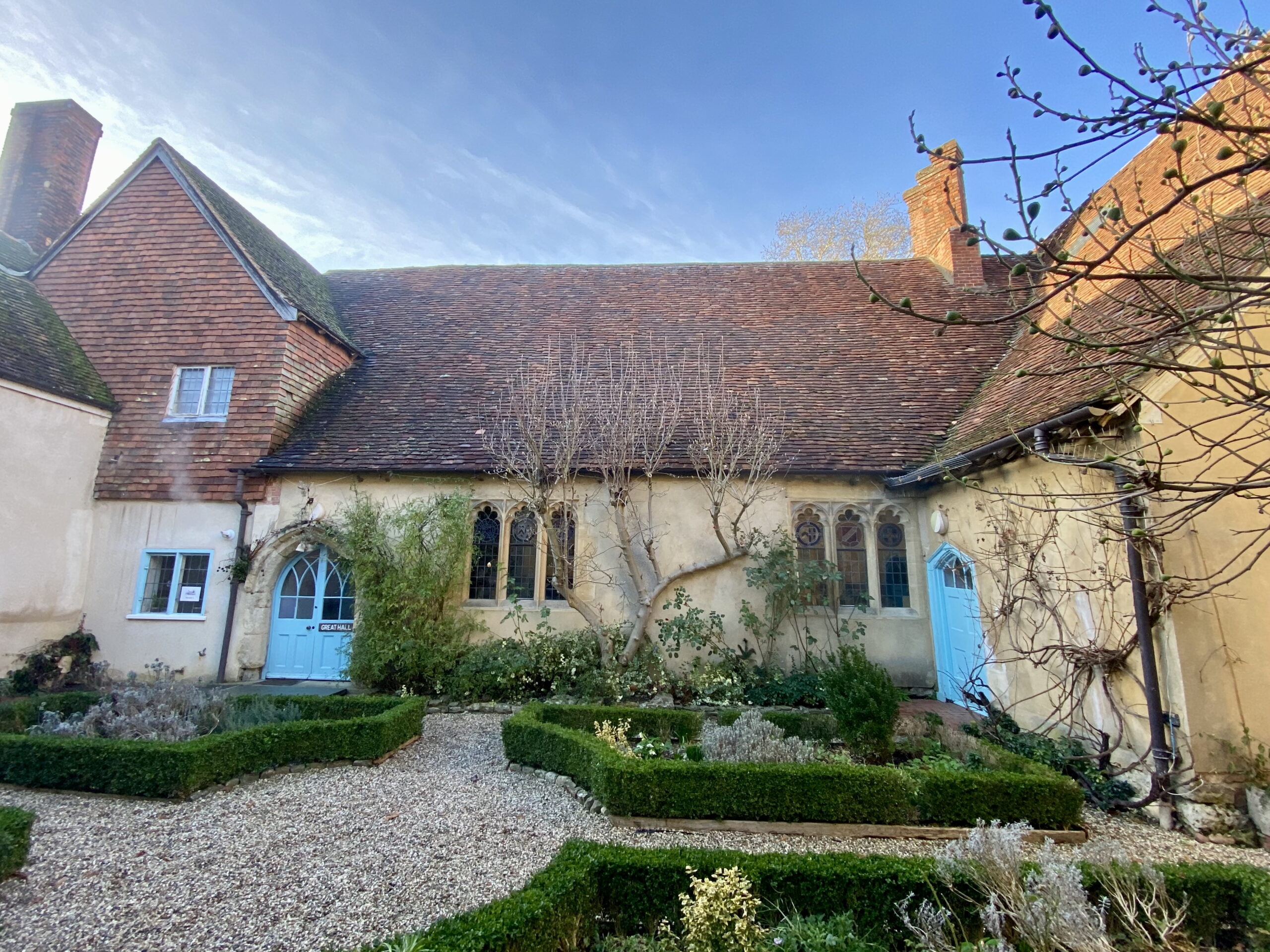
Whilst living on sitewith my family, I was extremely involved in Wolfson’s community. I loved Saturday brunches, the energy at the bar andmade extraordinary friends I’d hoped to keep for life. I even became the first sports rep post-COVID after being involved in various different collegiate sports teams, including captaining the Squash Team, and organising our 2023 Darwin Day.