This week, we celebrate Wolfson’s Women in Science. To mark British Science Week and International Women’s Day, we are sharing the stories of 5 female members of Wolfson’s scientific community who are making incredible contributions to their academic fields.
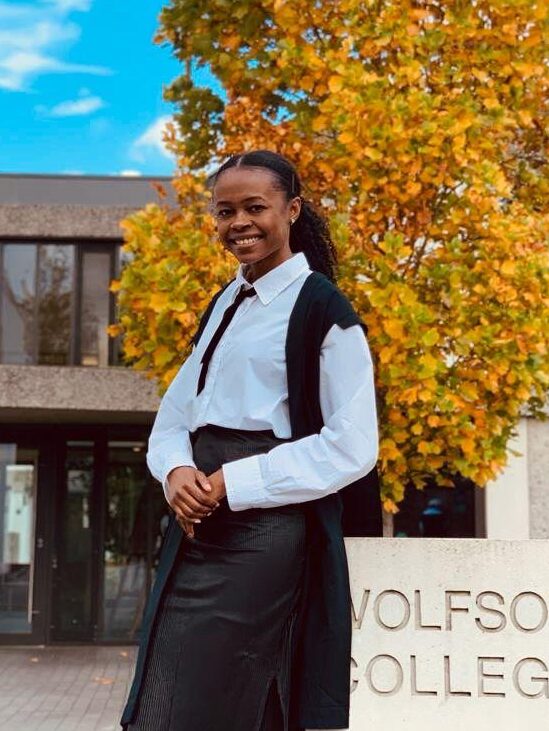
Dr Maria Ambrosio is a DPhil candidate in Social Intervention and Policy Evaluation and Teaching Fellow in Quantitative Research Methods at the Department of Social Policy and Intervention. After completing her Medical Doctor degree in Russia in 2017, she combined clinical practice with community-based health education initiatives in Angola. This sparked her desire to strengthen her methodological expertise and pursue a more research-focused career. She completed a Master of Public Health in Atlanta, USA and worked at the Georgia Department of Public Health, contributing to the state’s COVID-19 pandemic response.
Her doctoral research at the University of Oxford focuses on the application of non-AI chatbots to support parents in adopting positive parenting practices and promoting the healthy development of children and adolescents. This research is part of the Parenting for Lifelong Health Programme, a global partnership among governments, NGOs, and academic institutions that reaches over 8 million families across 35 countries and has contributed to averting an estimated 81,000 cases of severe child abuse.
Maria, tell us more about your research.
My research evaluates a non-AI chatbot–led programme delivered to 1,034 caregivers of adolescent girls in low-income South African communities. The intervention aims to promote positive parenting practices and improve adolescent health outcomes. While digital health programmes such as those delivered by Parenting for Lifelong Health offer promise in expanding access to parenting support, prior evidence shows that rural and low-income populations, particularly those with limited digital literacy and restricted internet or smartphone access, often benefit less from such initiatives.
My study examines both barriers and facilitators to technology use, as well as how parents apply the skills they learn through the chatbot. Findings indicate improvements in parent–adolescent relationships, adolescent mental health and increased communication about sensitive topics, including reproductive health.
The results highlight the importance of co-designing digital interventions with communities to ensure responsiveness to local needs and constraints. A gender-intentional approach is also critical, as restrictive gender norms may limit women’s and girls’ access to digital spaces. Finally, it is important to establish partnerships with government and private-sector partners to expand internet access and provide complementary human-delivered services for families with greater needs.
What initially inspired you to pursue this career?
My initial inspiration for conducting digital health research was the numerous opportunities it offers to expand access to healthcare and support individuals in adopting a healthier lifestyle. During my clinical practice, I was always bothered by the fact that my time with patients was often limited to 20 minutes, which made it impossible to communicate health information and encourage healthier lifestyle choices. I was fascinated by the opportunities that digital platforms provide us to scale preventive health programmes, empower patients, and reduce inequalities in access to care, particularly for populations underserved by geographic, socio-economic, or mobility barriers.
What continues to motivate you to pursue digital health research?
Today, my motivations are rooted in the impact my work has. To give you an example, we receive feedback from parents saying that this program “[made me realise that] I was not a safe space for my daughter”, with another saying, “My teenager is opening up with me more, coming to me for advice”. Parents also reported that having free access to technology and the convenience of receiving parental advice from home, free from judgment, are great wins for their adolescents and their families. Such feedback inspires me to continue researching in the field.
What advice would you give to young women who are interested in pursuing a career in science?
Stay curious and never let anyone make you feel that you do not belong. Your ideas are not insignificant because science is not merely a collection of facts. It is a continuous, evolving, and collaborative endeavour that thrives on diverse perspectives.
Be ambitious and do not be afraid to ask questions. There are no silly questions. Remember, many of the greatest scientific discoveries began with someone asking a thoughtful question. Seek out mentors whose work you admire, read a lot, and place yourself in supportive scientific communities where you can learn, grow, and find encouragement. There will be days when you feel less motivated, and in those moments, your community will matter more than you expect.
For example, I had no formal training in computer science, but I was deeply curious about how technology could be applied to health care. I recognised that my medical background allowed me to contribute a different and valuable perspective to the field. Today, I am supported by a strong DPhil community in my department and at Wolfson, which provides encouragement and perspective when motivation feels low.
What is one of your proudest moments as a scientist?
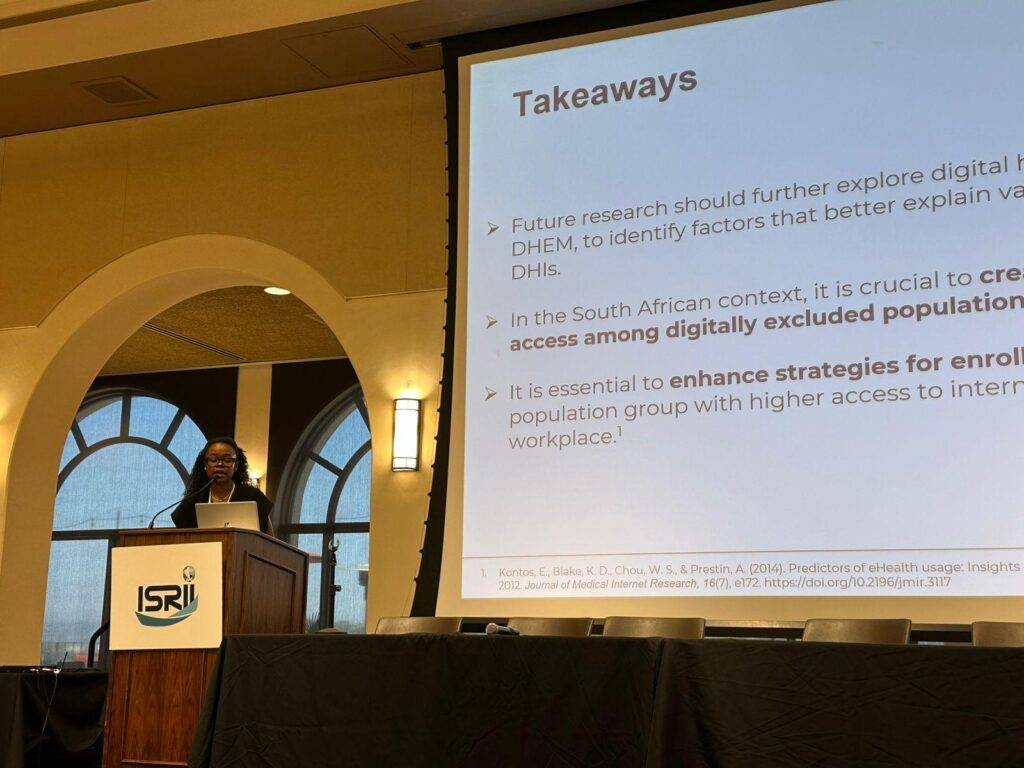
One of the proudest moments in my scientific journey is disseminating my research findings. In the last few years, I have been invited to speak at several international conferences, including the Society for Prevention Research and the International Society for Internet Interventions in the USA. One of the most impactful experiences I had was at the 2024 International Society for the Prevention of Child Abuse and Neglect (ISPCAN) in Uppsala, Sweden. The congress is a global, multidisciplinary conference that brought together state representatives, researchers, and practitioners from 73 nations and was opened by Queen Silvia of Sweden.
As I was sharing my findings at the congress, I remember thinking to myself, my research is giving a voice to thousands of children around the world. I am honoured to advocate for safer, more supportive family environments for children and adolescents before policymakers and world leaders at international conferences.
What does the Wolfson community mean to you?
I really enjoy the Wolfson community and have made long-term friendships since joining. One of the aspects I appreciate most is the opportunity to meet people from diverse personal and academic backgrounds. I like to joke that whenever I have a question about a discipline other than mine, there is someone at Wolfson I can talk to. Also, every time I talk to Wolfson members, I feel like I am becoming more educated on different disciplines.
For example, I once went to Cape Town, South Africa for a fieldwork trip and noticed the clouds resting on Table Mountain. I came back to Wolfson and reached out to one of my friends in Physics, and she gave me a great explanation of that breathtaking natural phenomenon.
Apart from making the most of my colleagues’ expertise, I am also part of the Wolfson Christian Society. I also love using the college library, playing tennis – being a long-term member of the college tennis club – and using the music rooms on the weekends to play the piano and the guitar.