Wolfson RF analyses how medieval women used falconry to subvert gender norms
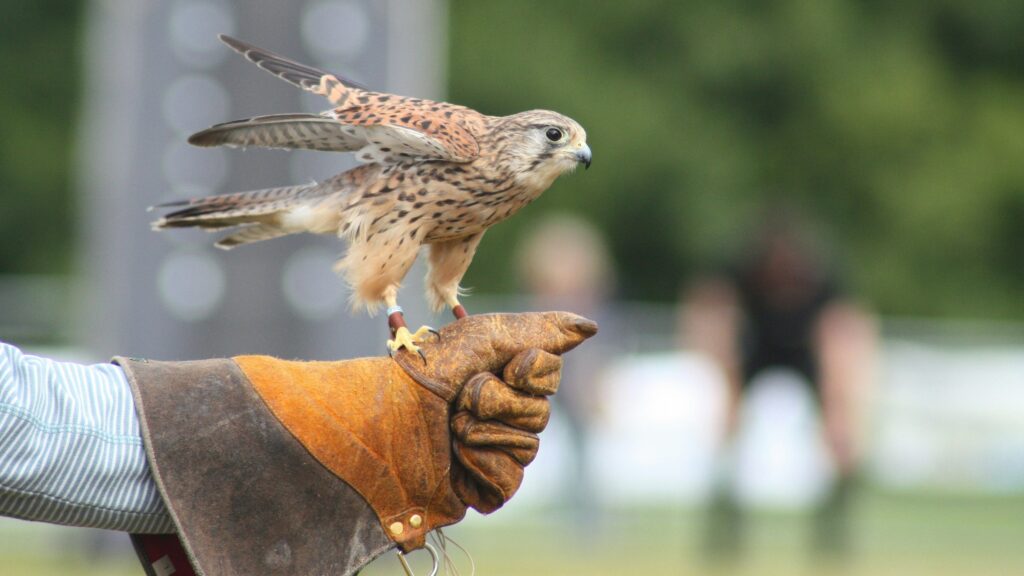
Wolfson Research Fellow Rachel Delman argues in a recent article published in The Conversation UK that medieval women used falconry to subvert gender norms, referencing recent screen adaptations of Chloé Zhao’s Hamnet and Helen Macdonald’s H is for Hawk, where birds of prey symbolise grief, identity and female selfhood.
In both adaptations, women use falconry as a means to express their experiences of loss, nature and independence. Delman suggests this symbolism isn’t new. In the medieval world, birds of prey carried rich meanings linked to romance, power and status, appearing in tapestries, mirror cases and popular literature as emblems of desire, control and social standing. Elite women used seals showing themselves confidently holding hawks to project authority and prestige. Queens and noblewomen managed hunting parks, trained birds and even wrote about the practice. Figures such as Dame Juliana de Berners and the professional hawk-keeper Ymayna show that women’s expertise in this field was recognised, even within a male-dominated society. Falconry also played a role in medieval politics and social networks: women gave and received birds of prey as prestigious gifts, took part in aristocratic hunting culture, and used falconry to signal their place in both female and male spheres of power.
In addition to her role as Research Fellow at Wolfson, Rachel is Heritage Partnerships Coordinator at the University of Oxford. She has published and taught widely on the late medieval and early Tudor periods, specialising in the areas of women’s and gender history, and material, place-based and spatial approaches.