Decoding Writing’s Lost Beginning: Wolfson GBF’s research featured in New Scientist
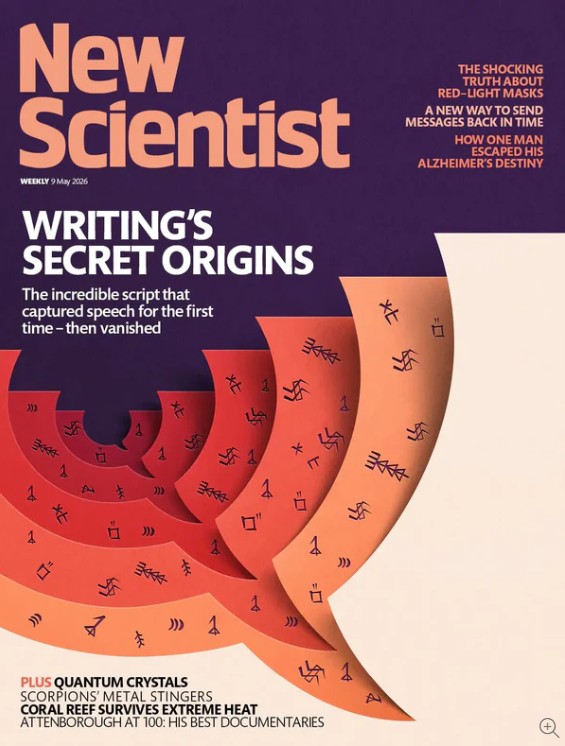
We were thrilled to learn that research by Professor Jacob Dahl, Wolfson GBF, and Professor of Assyriology, was featured in a recent issue of New Scientist magazine, headlining the cover of the 9th May issue.
Egyptian hieroglyphs and Mesopotamian cuneiform have long been considered the main forms of early writing, emerging independently about 5300 years ago. But we now know that a third script, called proto-Elamite, appeared in ancient Iran shortly after cuneiform and hieroglyphs had been invented. Despite being mostly overlooked since its discovery 125 years ago, by some measures it may have been the most advanced of the three scripts in operation about 5000 years ago. The sudden apparent abandonment of this script had puzzled Dahl and his colleagues for decades, but influenced by the theoretical thinking of Dr Parsa Daneshmand, Wolfson JRF, who introduced Dahl to the concept of schismogensis (recently popularised by David Graeber and David Wengrow), Dahl proposed that scribes in Iran eventually abandoned writing as an unnecessary, and oppressive foreign technology.
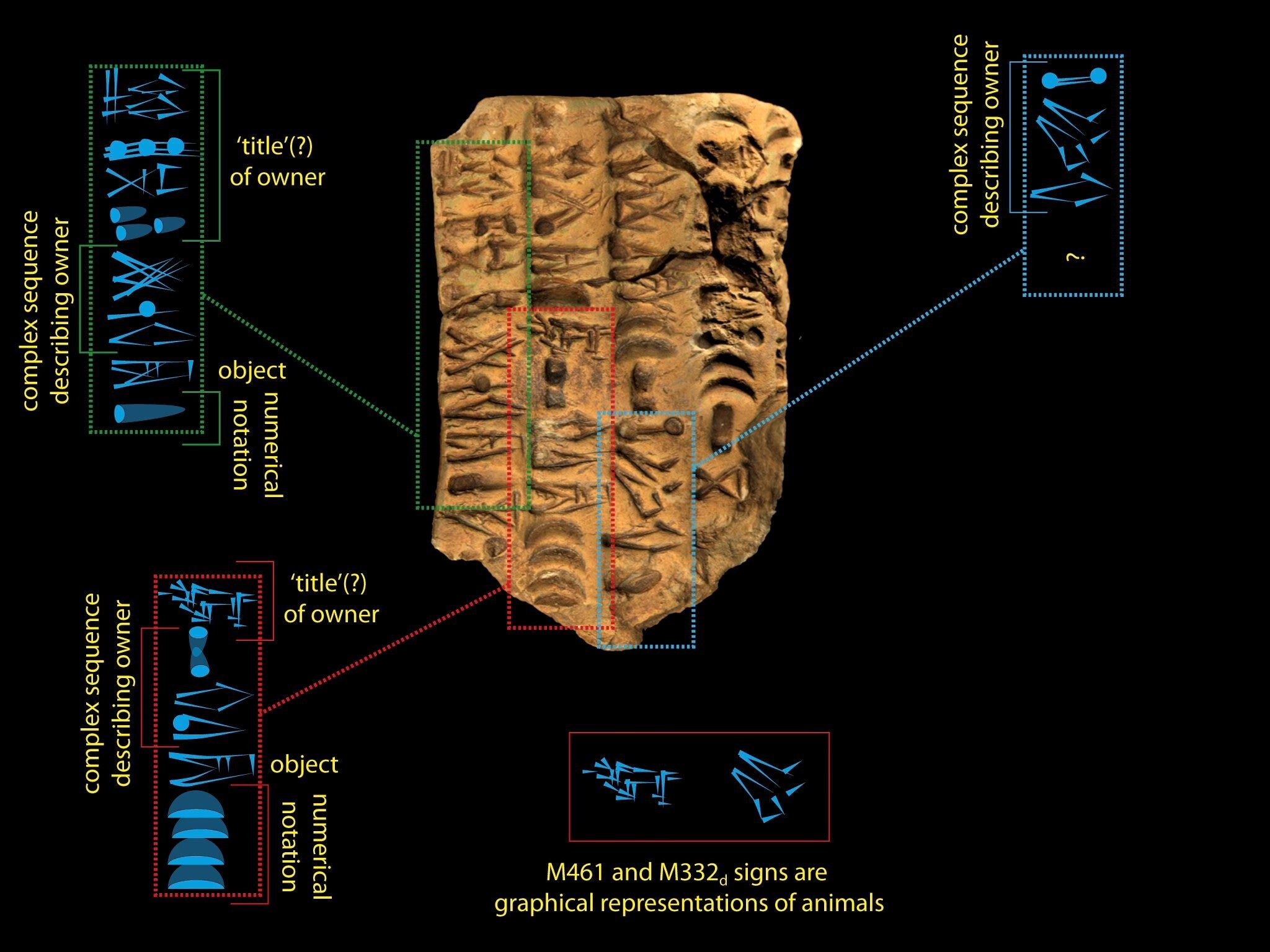
Just like the Mesopotamian script, proto-Elamite was inscribed into wet clay using a stylus, and some signs in both scripts are almost identical, but proto-Elamite developed in surprising ways, linearising the script and perhaps using signs to code phonetic information in a novel way long before their colleagues in Mesopotamia
The New Scientist article covers Professor Dahl’s painstaking digital reconstruction of a script that has resisted decipherment for more than a century. Archaeologists knew proto-Elamite existed: almost two-thousand clay tablets from ancient Susa in present-day Iran have been uncovered since the early 1900s. But the script remained largely unreadable and was often overshadowed by the more familiar early writing systems of Mesopotamian cuneiform and Egyptian hieroglyphics. Professor Dahl has helped to change that perception by treating proto-Elamite as a coherent information system worthy of large-scale digital analysis.
Professor Dahl focused his research on building a complete digital library of every known proto-Elamite inscription, digitising around 1,700 tablets, allowing researchers from several universities to analyse recurring sign patterns computationally for the first time. This transformed proto-Elamite studies from a fragmented field dependent on scattered museum collections into a data-rich discipline capable of statistical and structural analysis.
This method is representative of Dahl’s role in expanding the field of digital epigraphy. His approach mirrors broader trends in computational humanities, where machine analysis increasingly helps scholars detect hidden structures in ancient texts. Dahl’s proto-Elamite research is an early example of how digitisation can revive undeciphered writing systems once considered beyond recovery.
To learn more about proto-Elamite script, read the article online, click here.